


Page 184 - CSharp/C#
P. 184
on line 6 because line 6 does not execute.


        Logging as a side effect


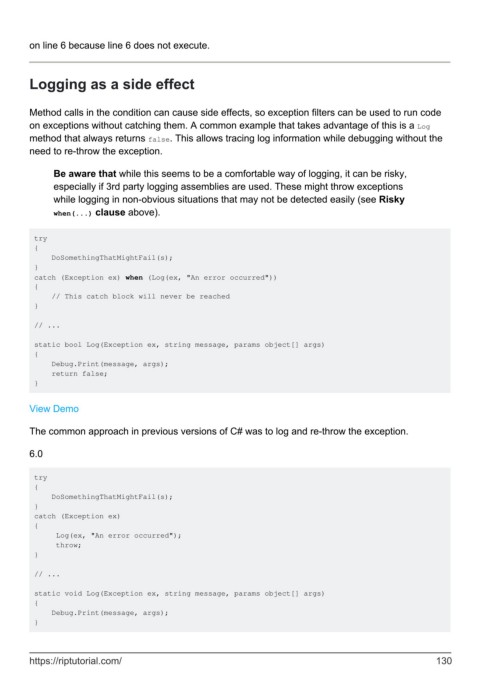
        Method calls in the condition can cause side effects, so exception filters can be used to run code
        on exceptions without catching them. A common example that takes advantage of this is a Log
        method that always returns false. This allows tracing log information while debugging without the
        need to re-throw the exception.

              Be aware that while this seems to be a comfortable way of logging, it can be risky,
              especially if 3rd party logging assemblies are used. These might throw exceptions
              while logging in non-obvious situations that may not be detected easily (see Risky
              when(...) clause above).


         try
         {
             DoSomethingThatMightFail(s);
         }
         catch (Exception ex) when (Log(ex, "An error occurred"))
         {
             // This catch block will never be reached
         }

         // ...

         static bool Log(Exception ex, string message, params object[] args)
         {
             Debug.Print(message, args);
             return false;
         }


        View Demo

        The common approach in previous versions of C# was to log and re-throw the exception.


        6.0


         try
         {
             DoSomethingThatMightFail(s);
         }
         catch (Exception ex)
         {
              Log(ex, "An error occurred");
              throw;
         }

         // ...

         static void Log(Exception ex, string message, params object[] args)
         {
             Debug.Print(message, args);
         }


        https://riptutorial.com/                                                                             130

